



Check Valve Solutions for the Mining Industry: Webinar Overview
 Mining is one of the oldest industries on Earth, but its challenges remain as modern as ever. At DFT®, we recently hosted a webinar titled Check Valve Solutions for the Mining Industry, led by Arie Bregman, who brings nearly five decades of experience in the valve industry. This session explored how the right check valve solutions help mines operate more safely, efficiently, and reliably—while avoiding costly problems like water hammer.
If you missed the original webinar launch, you can watch it on demand here. Below is an overview of what we covered.
Mining: A Global, Evolving Industry
Mining is a $3.5 trillion USD global industry that supplies essential raw materials for modern life—from precious and non-precious metals to lithium, coal, bitumen, salts, and gemstones. Extraction methods vary widely, from open-pit mining to deep underground mines, subsea mining, placer mining, and solution mining.
Each method has unique challenges, especially when it comes to water management, ore processing, and tailings disposal—all areas where reliable check valve solutions are critical.
Water Management: A Central Challenge
Both open-pit and underground mines must contend with significant water inflow—from groundwater, rain, or geological formations. Removing this water involves powerful pumps and extensive piping systems. A defining feature of these systems is vertical flow-up piping, where water must be lifted hundreds or thousands of feet to the surface.
Unlike horizontal systems, vertical pipelines require check valves that don’t rely on gravity to close. Without the right valve design, reverse flow during pump shutdown can create water hammer—a violent hydraulic shock that can damage equipment, increase maintenance costs, and pose serious safety risks.
Why Axial Flow (Silent) Check Valves?
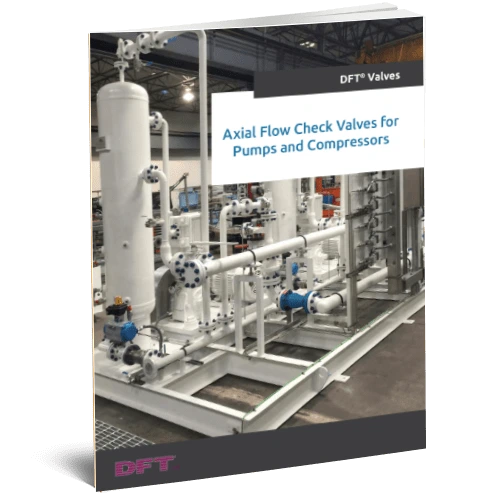
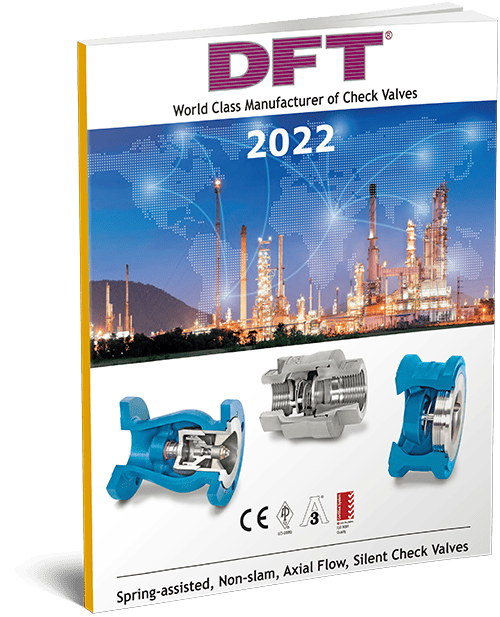
DFT’s axial flow check valves (also known as silent check valves) are designed specifically to mitigate water hammer. Their spring-assisted closure ensures they react immediately to flow reversal, preventing pressure surges. They work in any orientation—horizontal or vertical—making them ideal for the unique vertical piping demands of mining.
Ore Processing and Refining Applications
Once ore is removed from the mine, it is crushed, concentrated, and refined. Processes like flotation, leaching, and electrowinning use chemicals and fluids to extract valuable minerals such as copper or gold.
These systems often feature vertical flow, corrosive solutions, and abrasive solids—all of which place demands on check valve performance:
- Materials: DFT valves are available in stainless steels (316 SS, 410 SS) and high alloys (Monel, Hastelloy, Titanium) to handle corrosive and abrasive media.
- Customization: Options for hardened trim (e.g., 410 SS, Stellite) increase resistance to erosion in slurry or acidic environments.
- Oxygen Service: Gold refining uses oxygen, which requires special materials, cleaning, and certification to ensure safety and purity.
Tailings Management
Tailings—slurries of rock fines and residual chemicals—are a by-product of ore processing. Moving these abrasive, high-volume flows requires large pumps and equally robust check valves.
DFT axial flow valves in wafer or flanged designs are widely used for these applications. Options include:
- Wafer Style: Compact and cost-effective, conforming to standards like API 594 and EN 558.
- Short Pattern Flanged: One-piece bodies for strength, with options in carbon steel and stainless steel.
- Custom Materials: Trim options such as 410 SS or higher alloys for erosive or corrosive service.
Special Considerations: Subsea and Solution Mining
Mining isn’t limited to land. Subsea mining brings its own challenges, including saltwater corrosion and high ambient pressure. Here, materials like Monel, Nickel Aluminum Bronze, and Titanium become important. DFT offers extensive experience supplying valves in these high-performance alloys.
In solution mining—where chemicals are injected into ore bodies to dissolve minerals in place—pumps and check valves must handle harsh fluids while preventing reverse flow and water hammer.
Sizing Your Check Valves Correctly
One of the most important takeaways from our webinar is proper sizing. It’s not enough to match valve size to pipe diameter. Flow rates, pressure drop, and cracking pressure all matter. Undersized or oversized valves can:
- Fail to open fully at low flow, leading to chatter and premature wear.
- Create excessive pressure drop or noise at high flow.
DFT provides Cv values and detailed sizing guidance to ensure the valve works optimally in its specific application—reducing maintenance costs and improving reliability.
Why Choose DFT® Check Valves?
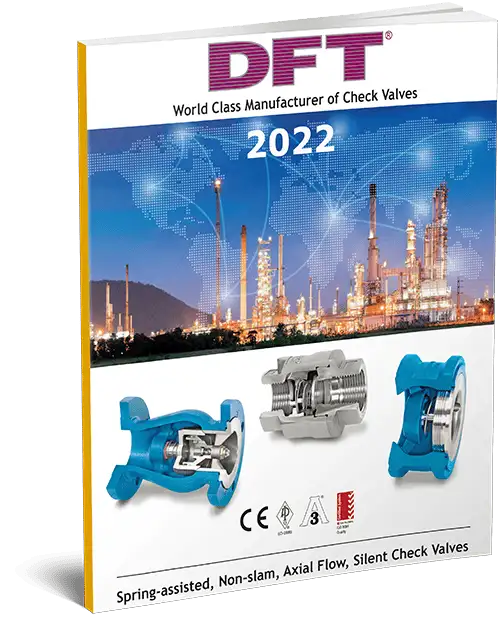
DFT® offers a wide range of axial flow check valves, engineered for the demands of mining:
- Axial flow design that eliminates water hammer
- Sizes from ½” through 42″
- Wafer and flanged styles, with end connections meeting ASME, EN, and API standards
- Materials from carbon steel to stainless steel, Monel, Inconel, Hastelloy, and Titanium
- Custom sizing support to optimize performance in your unique application
- Full QA documentation and certifications for specialized service
Watch the Webinar On Demand
If you missed Check Valve Solutions for the Mining Industry or want to review the details, you can watch it on demand here.
Have questions about your mining applications? We’re here to help. Contact us today to discuss your needs.



Comments are closed